AI Powered Reference Management with Zetaref

Introduction
Research should be about thinking, questioning, and discovering. Instead, for most students and researchers, it quietly turns into a second job: downloading PDFs, renaming files, organizing folders, fixing citations, and trying to remember where that one important paper came from. Reference management is supposed to help. Too often, it becomes another thing to manage.
Zetaref was built to remove that friction. It is a modern, AI-powered reference manager designed to help you collect, organize, understand, and use research papers without the usual overhead. This article explains what reference management really means today, the problems researchers still face, and how Zetaref approaches them differently.
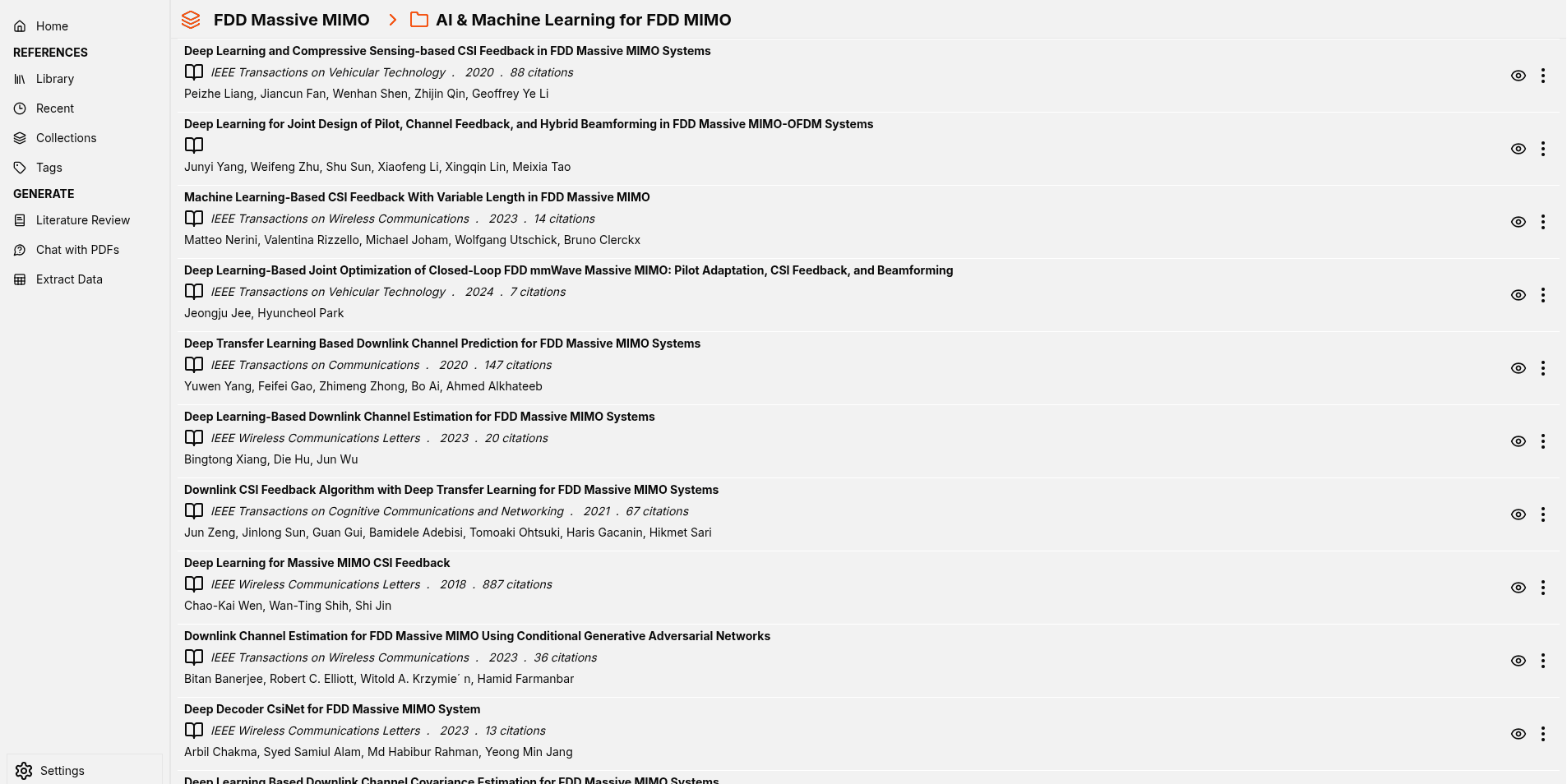
What Is Reference Management?
At a basic level, reference management is often described as collecting sources, organizing them, and citing them correctly. While this definition is technically accurate, it is incomplete. In practice, reference management is about preserving understanding over time. chat.deeAt its core, reference management is the process of:
Collecting research papers and sources
Organizing them in a way that makes sense
Annotating, highlighting, and taking notes
Generating citations and bibliographies correctly
Retrieving the right paper at the right time
Traditional tools focus heavily on storage and citation formatting. They assume that if your files are saved and your references are exported, the job is done. In practice, the hardest part is not saving papers. It is making sense of them later.
The Hidden Pain of Traditional Reference Tools
Even after decades of use, traditional reference management tools still fail to match the way research is done today. Their limitations often go unnoticed at first, but over time they quietly drain your focus, energy, and overall productivity.
Fragmented Workflow
These tools assume research happens in neat, separate stages:
PDFs stored in folders
Notes kept in different apps
Citations handled elsewhere
Every time you switch between these steps, you lose context. When your notes are separated from the papers that inspired them, the original insight fades—forcing you to mentally rebuild connections the tool should have preserved.
Ineffective Retrieval
Folder structures and file names are rigid, but your thinking evolves. Ideas shift, terms change, and papers that once seemed minor can later become essential.
Yet most tools rely on your memory: “What was that author’s name?” “Where did I save that article?”
When you can’t remember, you end up re-reading papers you’ve already processed—wasting time and effort.
Surface-Level Engagement
Highlighting and bookmarking often become passive habits. You end up with pages of highlighted text but few explanations. Months later, those highlights offer little insight into why they mattered or what you were thinking at the time.
The result? Annotated PDFs with no clear trail of your reasoning.
Static, Isolated Notes
Understanding in research is rarely final—it evolves as you read more and gain new perspectives. But most reference tools treat notes as fixed and linear, making it hard to revisit and refine ideas as your thinking grows.
Citation Complications
Even one of their supposed strengths—citation management—often brings last-minute stress:
Incomplete or incorrect metadata
Constantly shifting citation styles
Formatting issues that appear just before deadlines
These problems surface when you’re already stretched thin.
They Don’t Scale
What works for a few dozen papers becomes unmanageable with hundreds or thousands. Performance slows, organization breaks down, and the tool itself becomes another problem to solve.
The Core Issue
Ultimately, these tools focus on managing documents rather than supporting your thinking. As research grows faster and more interconnected, that gap becomes increasingly costly—holding back both creativity and productivity.
How Zetaref Rethinks Reference Management
Zetaref approaches reference management as a living research system rather than a static archive. Its design is guided by a simple idea: everything you do with a paper should remain connected to that paper, and everything you think about that paper should remain accessible when you need it.
A Single Research Workspace
Instead of scattering your workflow, Zetaref brings everything together:
Papers
Notes and annotations
Metadata and citations
AI-powered summaries and insights
Everything is connected, so context is never lost.
Smart Organization, Not Just Folders
Zetaref goes beyond rigid folder structures. You can organize papers using tags, collections, and semantic search, allowing the same paper to belong to multiple research threads without duplication.
This mirrors how research actually works: ideas overlap.
Deep Interaction with PDFs
With Zetaref, PDFs are not static files. You can:
Highlight and annotate directly
Attach structured notes to sections
Revisit annotations instantly
Link notes across papers
Your thinking evolves alongside the literature.
AI That Assists, Not Replaces You
Zetaref uses AI to support real research tasks, such as:
Summarizing papers and sections
Identifying key concepts and contributions
Comparing related studies
Helping surface connections across your library
The goal is not to automate thinking, but to reduce cognitive load so you can focus on it.
More Things You Can Do with Zetaref
Zetaref goes beyond traditional reference management with advanced research tools designed for real academic workflows.
Chat with One or Multiple PDFs
Ask questions in natural language and get answers directly from your papers. You can:
Query a single PDF for quick clarification
Chat across multiple papers to compare findings
Ask follow-up questions without re-reading entire documents
This makes revisiting complex literature faster and more intuitive.
Generate Literature Reviews
Zetaref can help you move from a collection of papers to structured understanding by:
Analyzing themes across multiple sources
Identifying consensus and disagreements in the literature
Producing draft literature reviews you can refine and cite
This is especially useful during early-stage research and proposal writing.
Extract Structured Research Data (IMRAD / PICO)
Instead of manually scanning papers, Zetaref can extract key structured elements such as:
IMRAD sections (Introduction, Methods, Results, Discussion)
PICO components for clinical and evidence-based research
This enables faster comparison across studies and more systematic reviews.
Export in Multiple Formats
Your references stay portable. Zetaref supports exporting to:
RIS
BibTeX (BIB)
CSV
This ensures seamless integration with other tools, journals, and workflows.
From Reading to Writing, Faster
Reference management matters most when you start writing.
Zetaref helps bridge the gap between reading and writing by:
Keeping your notes citation-aware
Making it easy to trace claims back to sources
Generating accurate citations and bibliographies
Ensuring nothing important gets lost
Instead of hunting for references at the last minute, your sources are already organized and ready.
Who Is Zetaref For?
Zetaref is designed for:
Students writing theses and dissertations
Researchers conducting literature reviews
Academics managing long-term research projects
Anyone overwhelmed by growing PDF libraries
If your research involves more than a handful of papers, reference management stops being optional. Zetaref makes it manageable.
The Future of Reference Management
Research is becoming faster, more interdisciplinary, and more data-driven. Reference management tools must evolve with it.
Zetaref represents a shift from file-centric tools to knowledge-centric systems. It is not just about storing papers. It is about building a living, searchable map of your research.
Conclusion
Reference management should not feel like administrative work. It should support understanding, clarity, and progress.
Zetaref is built to help researchers spend less time organizing files and more time doing what matters: thinking, writing, and discovering.
This is reference management, reimagined.